-
Understanding Vlans: A Practical Guide
A VLAN (Virtual Local Area Network) is a logical segmentation of a network at Layer 2 (the Data Link layer). Instead of grouping devices based on physical switch ports or cabling, VLANs allow you to group devices logically, regardless of where they’re physically connected. In practice, a VLAN creates its own broadcast domain. Devices in…
-
RFC 7258 Pervasive Monitoring Is an Attack
In the long lineage of RFCs that shape how the internet ought to work, RFC 7258 takes a different tone. It’s not describing a wire protocol or network algorithm, instead, it’s a declaration of threat model, a statement that reframes privacy surveillance as a first-class concern for internet architecture. Officially titled “Pervasive Monitoring Is an…
-
What is a virtual network?

In modern IT environments, networks are no longer limited to physical cables, switches, and routers. A virtual network is a software-defined network that allows devices, servers, applications, and services to communicate as if they were on the same physical network, even when they’re distributed across different locations, data centers, or cloud platforms. Instead of relying…
-
Understanding Underlay and Overlay Networks in Modern Infrastructure

Modern networks are more dynamic than ever. Between cloud adoption, virtualization, SD-WAN, and distributed applications, organizations rely heavily on technologies that sit on top of their physical infrastructure. But behind every modern overlay, there’s still a physical foundation powering it. That foundation is the underlay network, and the virtualized layer built above it is the…
-
RFC 1925 The Twelve Networking Truths

RFC Published: April 1, 1996Author: Ross CallonYou can read RFC 1925 here: https://www.rfc-editor.org/rfc/rfc1925.htmlRFC 1925 is a humorous yet painfully accurate document that outlines twelve fundamental “truths” about computer networking. While written as an April Fools’ RFC, it has aged exceptionally well and remains one of the most quoted documents in networking circles. Rather than defining…
-
Creating a Shared Network Drive for a Small Office

In a small office, having a common shared network drive makes collaboration easier, ensures consistency, and centralizes data storage and backup. In this post, I walk you through how to create a shared network drive, either using a NAS (Network Attached Storage) device or a Windows Server and highlight best practices around access control and…
-
RFC 1149 IP Datagrams on Avian Carriers

I though we should start this series with an absolute classic, one of most famous or at least well known RFCs, however despite its comedic origin, it has since inspired real-world implementations and continues to be a legendary piece of internet history. Overview RFC Published: April 1, 1990 | Author: David Waitzman RFC 1149 defines…
-
A Practical Guide to File Migration: Local Drives, OneDrive, and SharePoint
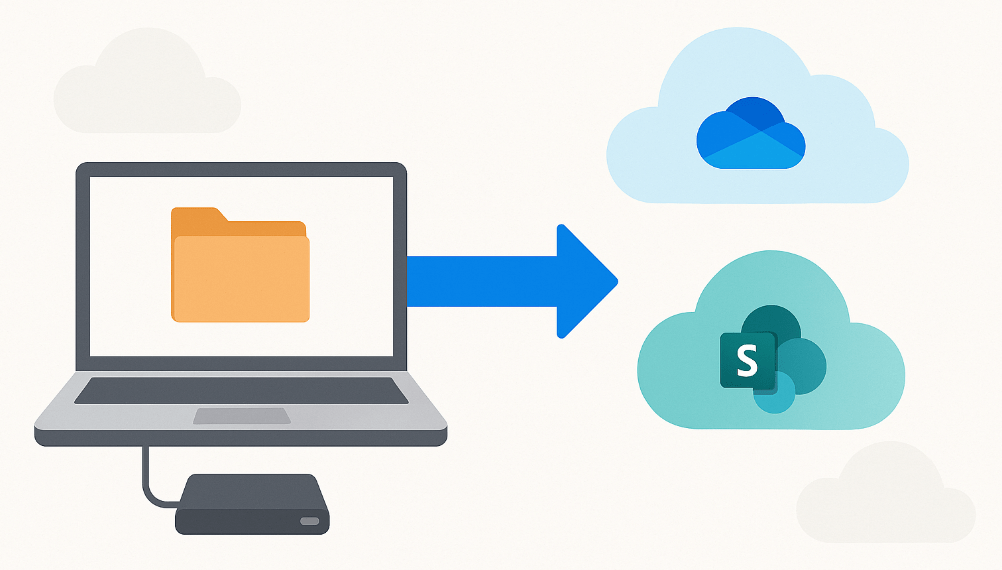
Migrating files is something every support tech and many end users will face at some point. Whether you’re replacing a failing hard drive, upgrading to a larger storage device, or transitioning from local storage to the cloud, knowing the right process makes the difference between a smooth transfer and a frustrating one. This guide walks…
-
Getting Started with the FRRouting Project (FRR)

When you’re experimenting with routing in a homelab, you usually face one of two options: spin up vendor simulators that require heavy resources, or rely on static routes and hope it’s “good enough.” But if you want something lightweight, open-source, and powerful enough to run real routing protocols, the FRRouting (FRR) Project is one of…
-
Graphiant: Rethinking Wide-Area Networking with a Stateless, Service-Based Model

Earlier this month at Networking Field Day 39, I had the chance to meet Graphiant — a Silicon-Valley–based Network-as-a-Service (NaaS) provider that’s taking a different approach to enterprise and B2B connectivity. Their architecture stood out because it doesn’t simply upgrade SD-WAN or copy MPLS — it redesigns the WAN entirely using metadata-driven routing, stateless forwarding,…
-
Subscribe
Subscribed
Already have a WordPress.com account? Log in now.
 Ctrl+Alt+Route